
Subject-to Real Estate: Ownership, Loan and Seller Liability
A deed, an accepted monthly mortgage payment, and a formal borrower release answer completely different legal questions. Trace the promissory note, due-on-sale clauses, and insurance before signing.
 By EstateHawk
On this page

The act of acquiring real estate "subject to" the existing mortgage: your first tip is to avoid deeding a distressed homeowner's property into a sham Wyoming land trust while telling them their primary mortgage debt magically evaporates from their credit report.
Who would have thought.
So elegant in its simplicity. Truly dazzling creative finance intellect.
While we are here, let us make sure bank robbers avoid dropping their driver's licenses on the teller counter, instruct astronauts never to remove their helmets during lunar spacewalks, and remind starry-eyed real estate seminar attendees that a recorded warranty deed does not wipe out a senior institutional deed of trust.
No, "the bank will never call the loan as long as payments are made" is only good advice for fake creative finance influencers and weekend mentorship peddlers who think commercial mortgage servicers never cross-reference county deed filings with computerized tax roll audits.
Here is what the dictionary and fake creative finance vloggers will never understand: for an actual transaction auditor, analyzing a subject-to structure is not a casual administrative review, it is an absolute obsession they have zero control over.
You sit down at your desk at eight in the evening, fully intending to review a standard three-page warranty deed with subject-to language in Mecklenburg County. Four minutes later, you find yourself four hours deep into a Dutch maritime dredging equipment liquidation exchange, carefully inspecting the maintenance logs of a 1982 IHC Beaver 1500 cutter suction dredger barge. It has twin steel pontoon hulls. It is powered by a twelve-hundred-horsepower Caterpillar marine diesel engine dedicated entirely to spinning a massive submerged rotating cutter head that chews through river silt, gravel, and submerged clay. An auxiliary turbocharged diesel engine drives a sixteen-inch heavy-duty centrifugal dredge pump that sucks up two thousand cubic yards of abrasive slurry per hour and discharges it through floating steel pipelines half a mile across the harbor. You are mentally calculating whether you could navigate this forty-meter industrial dredge barge down the Intracoastal Waterway to dredge out an unpermitted canal behind a distressed canal-front flip in Cape Coral. You are actively scrolling through archived Rotterdam marine engineering forums from 2012, reading vicious arguments about whether the mechanical seal packings on the submerged dredge pump shaft overheat when processing high-salinity brackish water or whether the hydraulic spud pole hoisting winches buckle under the lateral thrust of sixty-ton tidal currents.
The Instant Gratification Monkey was having the absolute time of his life dreaming of churning millions of gallons of black sea mud behind the helm of an industrial dredging vessel. Then the Rational Decision-Maker woke up, snapped the laptop closed, and stared cold-eyed at the actual conveyance instruments on the desk.
Because what was sitting on that desk was not an offshore marine engineering project. It was an aggressive, unhedged subject-to acquisition where an investor had taken a quitclaim deed from a desperate seller facing pre-foreclosure, promised to take over their three-percent fixed mortgage payments, and completely failed to notify the lender, establish a third-party loan servicing account, or replace the seller's cancelled homeowner's insurance policy.
The seller was still entirely on the hook for two hundred and forty thousand dollars of debt. The lender's loss-prevention department had just received an automated notice from the county tax assessor showing a change of ownership, and an acceleration letter demanding full repayment within thirty days was already in the mail.
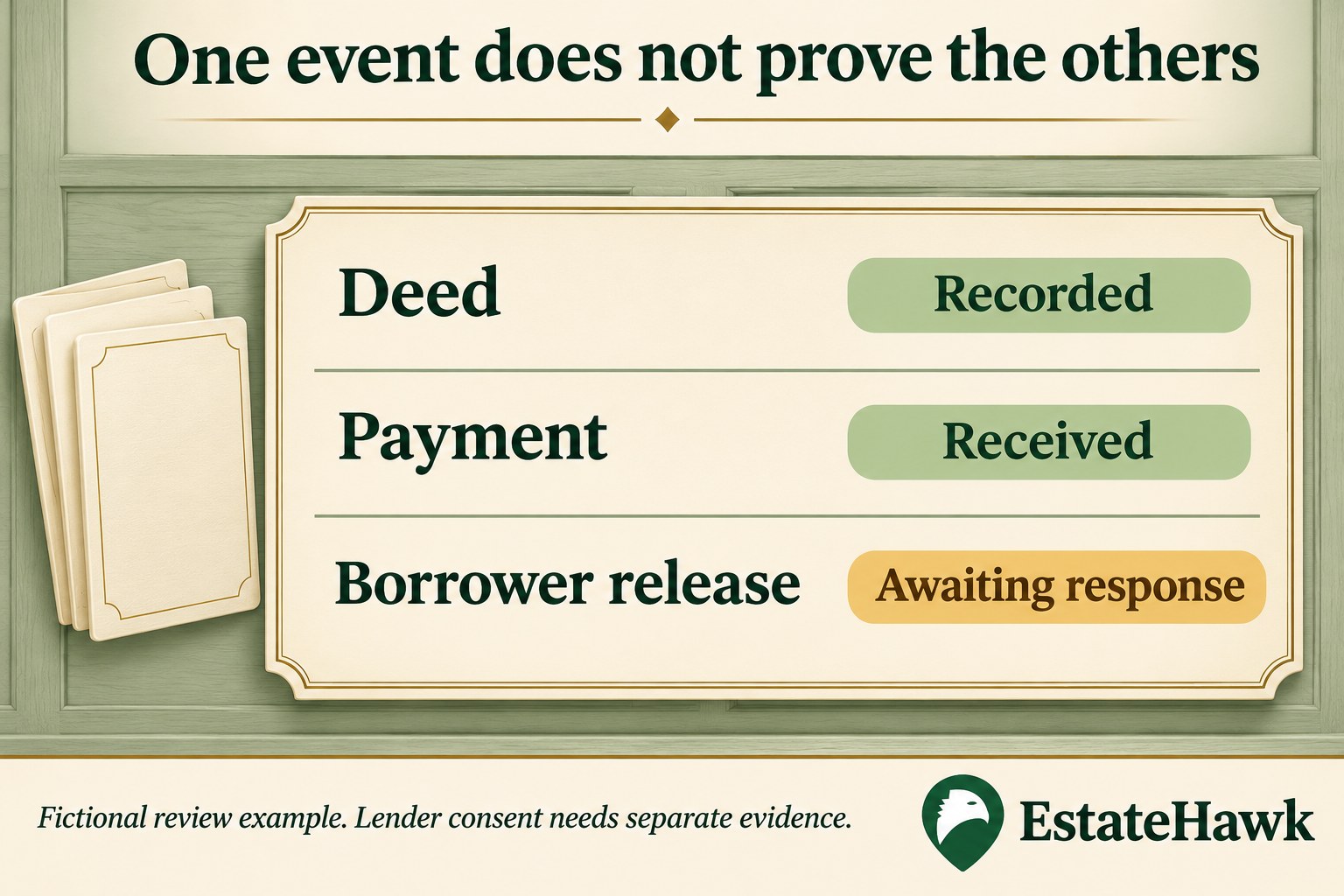
A recorded deed, an accepted monthly payment, and a formal release of mortgage liability are three entirely separate legal realities. If you conflate them, both the buyer and the seller will find themselves standing in front of a county foreclosure judge answering questions about deceptive trade practices.
Let us dismantle how a subject-to transaction actually operates under federal and state law, how the Garn-St. Germain Act governs due-on-sale acceleration, why the popular "land trust loophole" is a dangerous legal fiction, how to architect specialized dwelling fire insurance without committing fraud, and what statutory disclosures are legally mandated before a seller hands over their deed.
The Fundamental Anatomy: The Three-Way Transaction Split
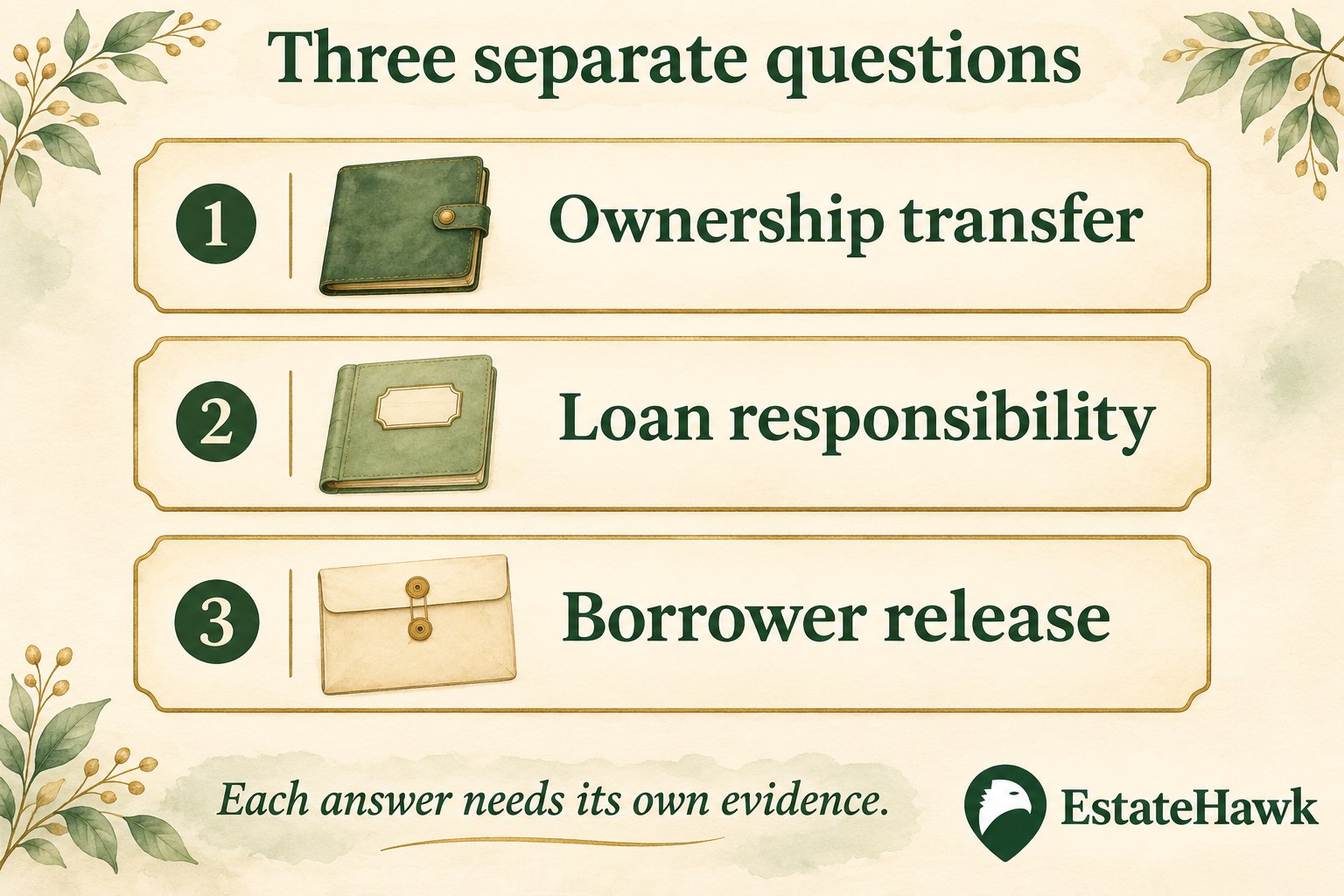
The term "subject to" is thrown around in real estate networking events as if it were a single, seamless contract. In reality, a subject-to transaction is a legal decoupling of property ownership from loan liability.
In a traditional real estate closing, three things happen simultaneously: the seller conveys the deed to the buyer, the buyer's purchase funds pay off the seller's existing mortgage in full, and the lender executes a formal satisfaction of mortgage that wipes the lien from the county records. The seller walks away with zero ownership and zero debt.
In a subject-to transaction, that unified sequence is ripped apart into three separate components:
Component One: The Conveyance of Title
The seller executes a deed conveying fee simple ownership of the real property to the buyer or the buyer's corporate entity. This is typically done via a General Warranty Deed, a Special Warranty Deed, or occasionally a Grant Deed.
The moment that deed is delivered and recorded in the county land records, the buyer becomes the legal fee simple owner of the property. The buyer has the absolute right to occupy the premises, renovate the building, rent it to tenants, or resell it. The seller no longer owns the real estate.
Component Two: The Promissory Note Obligation
Here is the crux: the seller's existing mortgage or deed of trust is not paid off. It remains recorded against the property in the county land records as a senior encumbrance.
More importantly, the Promissory Note, the personal legal contract promising to repay the borrowed money to the bank, remains exclusively in the original seller's name.
The buyer does not assume the loan. The buyer does not sign the promissory note. The buyer has zero personal legal liability to the lender. If payments stop tomorrow, the lender cannot sue the buyer for a deficiency judgment, cannot garnish the buyer's wages, and cannot report a delinquency on the buyer's credit report.
The lender's sole legal remedy against the buyer is an in rem proceeding: foreclosing on the physical collateral.
The seller, meanwhile, remains one hundred percent personally liable on the promissory note. If the buyer defaults on payments, the late fees, thirty-day delinquency notices, and eventual foreclosure judgment hit the seller's personal credit score with devastating force.
Component Three: The Absence of Novation
Many sellers mistakenly believe that signing a subject-to contract means they have been "released" from their mortgage.
That is completely false. A release of liability requires a formal legal novation executed by an authorized officer of the lending institution.
Lenders almost never grant a novation in an informal subject-to transaction. Why would a multibillion-dollar bank release a borrower whose credit and income they vetted, simply because an unvetted third party started wiring monthly payments?
Unless the lender has signed a written novation agreement, the seller remains permanently tethered to the debt until the loan is refinanced, paid off in full, or extinguished through foreclosure.
The Due-on-Sale Clause and the Garn-St. Germain Act
Every residential mortgage loan originated by institutional lenders in the United States over the last forty years contains an acceleration covenant known as the Due-on-Sale Clause.
The standard due-on-sale covenant, found in Section 18 of the standard Fannie Mae/Freddie Mac Uniform Instrument (Form 3006), states explicitly: "If all or any part of the Property or any Interest in the Property is sold or transferred without Lender's prior written consent, Lender may require immediate payment in full of all sums secured by this Security Instrument."
Notice the scope: it does not say "transferred unless payments are kept current." It says "sold or transferred."
The legal authority governing these clauses is federal: the Garn-St. Germain Depository Institutions Act of 1982, codified at 12 U.S.C. Section 1701j-3.
Prior to 1982, several state supreme courts (most notably California in the landmark case Wellenkamp v. Bank of America) ruled that due-on-sale clauses were unconstitutional restraints on alienation unless the lender could prove that the transfer impaired its security.
Congress passed the Garn-St. Germain Act specifically to preempt and invalidate all state laws and court decisions restricting due-on-sale enforcement. Under 12 U.S.C. Section 1701j-3(b), federal law explicitly authorizes lenders to enter into and enforce due-on-sale clauses according to their contractual terms.
The Statutory Exceptions Under Subsection (d)
To prevent abusive foreclosures against vulnerable families, Congress carved out nine specific protected transfers under 12 U.S.C. Section 1701j-3(d), where lenders are federally prohibited from exercising due-on-sale acceleration on residential real property containing less than five dwelling units:
Transfers creating a subordinate lien or second mortgage that does not relate to a transfer of rights of occupancy.
Transfers by devise, descent, or operation of law upon the death of a joint tenant or tenant by the entirety.
Transfers to a relative resulting from the death of a borrower.
Transfers where the spouse or children of the borrower become an owner of the property.
Transfers resulting from a decree of dissolution of marriage, legal separation agreement, or incidental property settlement agreement, by which the spouse becomes an owner.
Transfers into an inter vivos trust in which the borrower is and remains a beneficiary and which does not relate to a transfer of rights of occupancy in the property.
Notice what is missing from this list: an ordinary arm's-length sale to an unrelated real estate investor.
An investor buying a property subject to an existing mortgage does not fall under any federal statutory protection. The lender has the absolute, unassailable legal right to call the loan due and demand immediate payoff in full.
The "Land Trust Loophole" Myth: Debunking Guru Deception
In the creative finance seminar circuit, promoters routinely teach what they claim is a foolproof legal loophole to bypass the Garn-St. Germain Act: the "Land Trust Strategy."
The guru instructs the investor to set up an unrecorded revocable inter vivos trust (a land trust), name the seller as the initial beneficiary, deed the property into the trust, and then quietly have the seller assign the beneficial interest of the trust to the investor or the investor's LLC behind closed doors. The guru assures the buyer that because Garn-St. Germain protects transfers into an inter vivos trust, the bank is legally barred from calling the loan.
This strategy is pure legal fiction. It misrepresents federal statutory law.
Look at the precise statutory language of 12 U.S.C. Section 1701j-3(d)(8): The exception protects a transfer into an inter vivos trust "in which the borrower is and remains a beneficiary and which does not relate to a transfer of rights of occupancy in the property."
The statute requires two conjunctive conditions: the borrower must remain a beneficiary, and the transfer must not relate to a transfer of occupancy.
When the seller assigns their beneficial interest in the trust to the investor, the borrower no longer remains a beneficiary. The statutory exception is instantly extinguished.
Furthermore, when the investor or the investor's tenant moves into the home, a transfer of occupancy has occurred. That alone invalidates the exception.
If a lender audits the transaction and discovers that the beneficial interest was transferred to a third party, the lender can accelerate the note immediately. If the lender discovers that documents were deliberately manipulated to conceal the transfer, the parties face serious scrutiny regarding loan servicing fraud and deceptive concealment.
Transferring real estate into a land trust may obscure the transaction from casual observers, but it provides zero statutory immunity against a lender exercising its due-on-sale rights under federal law.
Lender Enforcement Mechanics: What Actually Triggers Acceleration?
If lenders have the absolute legal right to accelerate loans, why do so many subject-to transactions survive for years without being called?
The reality of mortgage banking is governed by operational incentives and computerized risk management:
In an era of low interest rates, lenders generally did not dedicate resources to hunting down unapproved transfers as long as monthly payments were made on time. A performing loan was an asset.
However, when macroeconomic interest rates rise, the institutional calculus changes dramatically. If a lender holds a thirty-year fixed mortgage on its balance sheet yielding two point seven-five percent, while the current cost of capital is six or seven percent, that loan is a drag on bank profitability. The lender has an intense financial incentive to identify covenant defaults, accelerate the low-interest note, and redeploy that capital into higher-yielding assets.
Lenders detect subject-to transfers through three automated vectors:
Vector One: Hazard Insurance Notification
This is the most common trigger. When a property transfers, the existing homeowner's insurance policy must be updated or replaced.
If the insurance company issues a cancellation notice to the mortgage servicer, or if a new insurance company sends an amended declarations page showing a new named insured, the servicer's automated escrow department flags the loan for an ownership audit.
Vector Two: Property Tax Assessment Transfers
In many jurisdictions, county property tax assessors receive electronic feeds of all recorded deeds. When an assessor updates the tax rolls, the new owner's name and billing address appear on the county property tax statement.
If the mortgage servicer pays property taxes from an escrow account, the servicer's tax tracking department receives a tax bill where the owner of record does not match the mortgagor in the loan file, triggering a transfer investigation.
Vector Three: Unmatched Wire Senders and Third-Party Communications
Under CFPB Regulation X (12 C.F.R. Section 1024.30) governing mortgage servicing, loan servicers are strictly prohibited from discussing loan details with unauthorized third parties.
If an investor calls the servicer attempting to discuss an escrow shortage or change the billing address without an executed Third-Party Authorization form, or if payments begin arriving from an LLC bank account, the servicer can initiate a title audit.
When a transfer is discovered, the lender issues a formal Demand Letter (often called a 30-Day Notice of Intent to Accelerate). The letter informs the borrower that the unauthorized transfer violates Section 18 of the security instrument and demands that either the property be transferred back to the original borrower within thirty days, or the entire remaining principal balance be paid in full.
If neither condition is met, the lender refers the file to a foreclosure trustee or foreclosure litigation counsel.
The Insurance Architecture: Avoiding Void Policies and Insurance Fraud
Handling hazard insurance is the most delicate and critical operational hurdle in a subject-to acquisition. Mishandling insurance exposes the property to catastrophic uninsurable losses and can result in felony insurance fraud.
The Fatal Mistake: Leaving the Seller's Policy Active
The most common, catastrophic mistake novice investors make is simply leaving the seller's existing HO-3 homeowner's insurance policy in place, with the buyer paying the premium through the lender's monthly escrow.
This policy is completely void.
A standard HO-3 homeowner's policy is legally predicated on owner-occupancy. Under state insurance codes, the insured must have an insurable interest as an owner-occupant.
The moment the seller signs a warranty deed and vacates the premises, the seller no longer owns the real estate and no longer occupies the home. They have lost their primary insurable interest in the structural dwelling.
If a catastrophic fire, hurricane, or burst pipe destroys the home, the insurance company dispatches an independent claims adjuster. The adjuster investigates, discovers that the seller moved out two years ago and that the home is occupied by an unrelated investor or tenant.
The insurance carrier will deny the claim entirely, citing material misrepresentation and lack of insurable interest, and void the policy ab initio.
The buyer loses the entire value of the home, the seller remains on the hook for a quarter-million-dollar mortgage on a pile of ashes, and the lender forecloses on the charred foundation.
The Correct Architecture: The DP-3 Specialized Policy
To ensure legal, enforceable insurance coverage without committing fraud, the transaction must be structured through a specialized commercial or dwelling fire insurance policy:
The policy must be an owner-landlord policy, typically a DP-3 (Dwelling Property 3 Special Form) policy.
The Named Insured must be the actual legal title holder: the buyer or the buyer's purchasing entity (e.g., an LLC). The buyer has the full insurable interest in the fee simple title.
The underlying mortgage lender must be formally named on the policy declarations page as the First Mortgagee and Loss Payee, utilizing the lender's exact institutional servicing address and loan number. This guarantees that the lender receives standard insurance certificates and that loan covenants requiring continuous lender coverage are satisfied.
The original seller must be named as an "Additional Insured" or "Interested Party." Because the seller remains personally liable on the underlying promissory note, they retain an insurable financial interest in the preservation of the collateral. Naming the seller as an additional insured protects their liability and entitles them to notice of policy renewal or cancellation.
This transparent structure satisfies state insurance requirements, provides ironclad casualty coverage that adjusters cannot void, and supplies the mortgage servicer with a compliant insurance certificate.
State Statutory Protections and Predatory Lending Disclosures
Because subject-to transactions have historically been abused by predatory operators who took deeds from distressed homeowners in pre-foreclosure and then pocketed tenant rent while allowing the underlying mortgage to go into foreclosure, state legislatures have enacted aggressive consumer protection statutes.
Texas: Texas Property Code Section 5.016
Texas has the most severe statutory penalties in the nation regarding subject-to transfers, codified at Texas Property Code Section 5.016 (Conveyance of Residential Property Encumbered by Lien).
Under Section 5.016, an individual cannot convey an interest in residential real property that is encumbered by a recorded lien unless the seller and buyer provide formal, written statutory disclosures at least seven calendar days before contract execution:
The seller must provide a detailed written disclosure to the buyer stating the name, address, and loan number of the lienholder, the unpaid balance, the interest rate, the monthly payment amount, and an explicit statement that if the transfer is completed without lender consent, the lienholder has the legal right to accelerate the debt and demand payment in full within thirty days.
Simultaneously, the seller must deliver a formal written notice to the mortgage lienholder via certified mail, notifying the bank of the proposed transfer, the buyer's identity, and the transaction terms.
The buyer must provide a written disclosure to the seller stating that the buyer is taking title subject to the mortgage, that the debt will remain in the seller's name, and confirming who is responsible for payments.
Violating Texas Property Code Section 5.016 is a per se deceptive trade practice under the Texas Deceptive Trade Practices-Consumer Protection Act (DTPA).
If a buyer fails to provide these mandatory disclosures, the seller can rescind the conveyance at any time, demand a full refund of all consideration, and sue the buyer for treble damages, statutory penalties, and attorney fees. Furthermore, willful violations are classified as Class A misdemeanors.
North Carolina: Real Estate Commission Regulatory Alerts
The North Carolina Real Estate Commission (NCREC) has issued repeated regulatory alerts warning licensed brokers and consumers about the severe legal liabilities inherent in subject-to transactions.
The Commission emphasizes that licensed brokers who facilitate subject-to acquisitions without independent legal counsel for both parties face disciplinary revocation of their real estate licenses for incompetence and improper conduct.
North Carolina mandates that sellers receive comprehensive legal disclosures explaining that the buyer's promise to pay does not bind the bank, that the debt remains on the seller's credit report, that the seller's debt-to-income (DTI) ratio will be severely impaired for future home purchases, and that lender acceleration can result in complete foreclosure without any legal recourse against the buyer under the note.
The Seller's Ongoing Exposure: DTI Impairment and Credit Destruction
A subject-to sale is never truly "closed" for the seller until the underlying mortgage is extinguished. The seller remains exposed to two ongoing financial risks:
Debt-to-Income (DTI) Destruction
When the seller applies for a new mortgage to purchase a replacement home, the existing subject-to mortgage appears as an active liability on their credit report.
Under standard Fannie Mae and Freddie Mac underwriting guidelines, a borrower who has sold a home subject-to cannot simply ignore that mortgage debt.
To exclude the mortgage payment from their DTI calculation, Fannie Mae Selling Guide Section B3-6-05 typically requires the borrower to provide:
A copy of the executed subject-to purchase agreement and recorded deed proving transfer of ownership.
Twelve consecutive months of verified bank statements or third-party loan servicing records proving that the buyer has paid the mortgage payments on time, with zero thirty-day delinquencies.
If the buyer pays through informal cash transfers, or if twelve months of verifiable payments have not elapsed, the underwriting system counts the entire monthly mortgage payment against the seller's personal DTI ratio. For most sellers, this immediately disqualifies them from obtaining a new home mortgage or an auto loan.
The Wrap / Performance Deed of Trust Solution
To protect the seller against catastrophic credit destruction if the buyer stops paying, sophisticated property attorneys utilize a Performance Deed of Trust (also known as an Indemnity Deed of Trust or Reverse Trust Deed).
When the buyer receives the warranty deed, the buyer simultaneously executes a Performance Deed of Trust encumbering the property in favor of the seller.
The Performance Deed of Trust states that if the buyer fails to make the monthly payments on the underlying senior mortgage, or fails to maintain compliant insurance, the seller has the immediate legal right to foreclose on the buyer under state power-of-sale or judicial foreclosure statutes.
This gives the seller a powerful legal mechanism: if the buyer defaults, the seller can take the property back through foreclosure before the underlying bank executes its own foreclosure, preserving the seller's equity and mitigating credit damage.
Subject-To Operational and Regulatory Audit Ledger
Before executing purchase agreements, taking deeds, or marketing subject-to properties, utilize this operational audit framework to review every dimension of transaction risk:
Ledger columns: Transaction Dimension; Verification Target; Primary Operational Failure; Governing Law & Regulatory Source
Statutory Due-on-Sale
- Verification Target: Audit underlying mortgage instrument for Section 18 acceleration covenants.
- Primary Operational Failure: Lender discovers transfer via tax records and issues 30-day demand letter for full payoff.
- Governing Law & Regulatory Source: 12 U.S.C. § 1701j-3, Garn-St. Germain Act, Fannie Mae Uniform Instrument Form 3006.
Inter Vivos Trust Review
- Verification Target: Disclose that trust beneficial assignment eliminates Garn-St. Germain exception.
- Primary Operational Failure: Buyer relies on land trust loophole; bank accelerates note for transfer of occupancy.
- Governing Law & Regulatory Source: 12 U.S.C. § 1701j-3(d)(8), CFPB Real Estate Transfers, State Trust Jurisprudence.
Statutory Disclosure Compliance
- Verification Target: Execute mandatory pre-closing written disclosures to seller and underlying lienholder.
- Primary Operational Failure: Buyer fails to issue 7-day notice; transaction voidable with treble damages under DTPA.
- Governing Law & Regulatory Source: Texas Property Code § 5.016, NCREC Subject-To Bulletins, State Consumer Protection Acts.
Casualty Insurance Structure
- Verification Target: Issue DP-3 dwelling policy naming buyer as Insured and lender as First Mortgagee/Loss Payee.
- Primary Operational Failure: Buyer keeps seller's invalid HO-3; total casualty claim denied for lack of insurable interest.
- Governing Law & Regulatory Source: State Insurance Codes, Standard Mortgagee Clause Endorsements, DP-3 Policy Specs.
Loan Servicing Architecture
- Verification Target: Mandate licensed third-party loan servicing to process payments and handle escrow audits.
- Primary Operational Failure: Buyer pays informally; seller cannot prove 12-month payment history for Fannie Mae DTI waiver.
- Governing Law & Regulatory Source: CFPB Reg X (12 C.F.R. § 1024.30), Fannie Mae Selling Guide B3-6-05, RESPA Rules.
Title Insurance Endorsement
- Verification Target: Audit Title Commitment Schedule B to identify existing mortgage exception terms.
- Primary Operational Failure: Buyer assumes title policy protects against due-on-sale; claim denied under standard exceptions.
- Governing Law & Regulatory Source: ALTA Owner's Policy Schedule B Exceptions, Alliant National Underwriting Bulletins.
Seller Security Architecture
- Verification Target: Execute and record a Performance Deed of Trust encumbering the property in seller's favor.
- Primary Operational Failure: Buyer defaults on debt service; seller has no legal mechanism to recover title before bank auction.
- Governing Law & Regulatory Source: State Foreclosure Statutes, Indemnity Deeds of Trust, Security Agreement Rules.
Escrow Shortage Cushion
- Verification Target: Reconcile property tax reassessment and budget working capital for escrow deficits.
- Primary Operational Failure: Property taxes uncap upon deed recording; monthly escrow payment spikes by hundreds of dollars.
- Governing Law & Regulatory Source: County Assessor Transfer Standards, Servicer Escrow Analysis Guidelines.
Case Study: The Mecklenburg County Land Trust Due-on-Sale Acceleration
To understand how due-on-sale acceleration occurs in practice, examine the transaction dispute that unfolded in Mecklenburg County, North Carolina, involving a two-story suburban home in Charlotte.
In August 2022, an investor named Trevor attended a creative real estate seminar and decided to acquire an off-market property owned by a distressed homeowner named Brenda. Brenda owed two hundred and fifteen thousand dollars on a thirty-year fixed mortgage at two point eight-seven-five percent, with a monthly principal and interest payment of nine hundred and twenty dollars.
Trevor convinced Brenda to execute a subject-to transfer using a land trust structure:
Trevor drafted an unrecorded revocable land trust agreement naming Brenda as the initial beneficiary. Brenda executed a Special Warranty Deed conveying the real estate to the trust.
Immediately following the deed execution, Brenda signed an assignment of beneficial interest, transferring one hundred percent of the trust's beneficial interest to Trevor's investment LLC.
Trevor did not use a third-party loan servicing company. He instructed Brenda to leave her online banking profile active, and Trevor simply logged into Brenda's personal mortgage portal every month to pay the nine-hundred-and-twenty-dollar payment using his LLC debit card.
Trevor also left Brenda's existing homeowner's insurance policy active, reimbursing her for the premium through the mortgage escrow.
Eleven months into the arrangement, in July 2023, the insurance company conducted an automated address and occupancy review:
The insurer discovered that Brenda had registered a new primary residential address in Raleigh, North Carolina, and had taken out an auto insurance policy at that location.
The insurance carrier immediately issued a formal cancellation of the homeowner's policy, citing non-occupancy of the insured premises, and transmitted an electronic cancellation notice to the mortgage servicer.
The mortgage servicer's loss-prevention unit opened a risk file. The servicer conducted a title date-down in the Mecklenburg County Register of Deeds and discovered the recorded deed transferring title into the trust.
The servicer sent a formal inquiry to Brenda demanding verification that she remained the sole beneficiary of the trust and that the transfer did not involve an occupancy change, as required by 12 U.S.C. Section 1701j-3(d)(8).
Trevor attempted to intervene, claiming the transfer was exempt under federal law. The servicer demanded a certified copy of the trust agreement and all amendments:
When Trevor produced the documents, the servicer saw the executed assignment transferring the beneficial interest to Trevor's LLC, alongside proof that the property was occupied by third-party rental tenants placed by Trevor.
The servicer's legal counsel issued an immediate Notice of Acceleration under Section 18 of the security instrument. The letter informed Brenda and Trevor that the Garn-St. Germain exception was inapplicable, declared the entire unpaid balance of two hundred and twelve thousand dollars immediately due and payable, and gave them thirty calendar days to deliver certified payoff funds.
Trevor did not have two hundred and twelve thousand dollars in cash. Furthermore, macroeconomic interest rates had risen to seven point five percent, making an institutional refinance mathematically unfeasible based on the property's rental income.
When the thirty-day cure window expired, the servicer referred the file to a substitute trustee, who filed a Special Proceeding for non-judicial foreclosure before the Mecklenburg County Clerk of Superior Court.
Brenda was named as the sole defendant. She received a foreclosure summons at her new home in Raleigh. Terrified that her credit would be annihilated and facing an impending foreclosure auction, Brenda retained a local consumer litigation attorney:
Counsel filed an emergency cross-claim against Trevor, asserting violations of the North Carolina Unfair and Deceptive Trade Practices Act (N.C.G.S. Section 75-1.1), common-law fraud, and breach of fiduciary duty.
Counsel proved that Trevor had falsely represented to Brenda that the land trust made the transfer completely legal and immune from acceleration under federal law.
To avoid personal liability for treble damages and attorney fees, Trevor was forced to sell the property at a fire-sale discount within fourteen days, liquidating his own personal savings to pay the bank's accelerated balance, late fees, and six thousand dollars of Brenda's legal expenses.
Trevor walked away with a net loss of twenty-eight thousand dollars. Had he properly disclosed the due-on-sale risk, structured transparent DP-3 insurance, and established a funded capital reserve to handle potential acceleration, the transaction could have been managed without civil litigation.
Case Study: The Tarrant County Statutory Disclosure Rescission
A second case study demonstrating the catastrophic impact of state disclosure failures occurred in Tarrant County, Texas, involving a residential property in Fort Worth.
In February 2021, an investor named Jason entered into a subject-to purchase agreement with a homeowner named David, who was behind on his mortgage payments following a medical crisis. David's property was encumbered by an FHA mortgage with an outstanding principal balance of one hundred and seventy-eight thousand dollars.
Jason agreed to bring the mortgage current by paying eight thousand four hundred dollars in arrears to the loan servicer and taking over the monthly payments of thirteen hundred dollars.
Jason drafted the purchase agreement himself, using a template downloaded from an online creative finance masterclass:
Jason took a General Warranty Deed from David and recorded it in the Tarrant County Clerk's office.
However, Jason completely failed to comply with Texas Property Code Section 5.016. He did not provide David with the mandatory seven-day written disclosure detailing the lien terms, failed to provide the mandatory thirty-day acceleration warning, and did not send certified notice of the transfer to the mortgage servicer.
Over the next twenty-six months, Jason spent twenty-four thousand dollars renovating the property, rented it to a family for nineteen hundred dollars a month, and faithfully made every single mortgage payment to the servicer through a third-party loan servicing company.
By April 2023, the Fort Worth real estate market had experienced significant appreciation. The property was appraised at two hundred and ninety thousand dollars, representing over eighty thousand dollars of net equity above the debt and renovation costs.
David, having recovered from his medical issues, consulted an attorney to review his credit report, where the FHA mortgage was still listed as an open account:
David's attorney pulled the county land records, audited the purchase transaction, and discovered that Jason had failed to comply with the strict statutory requirements of Texas Property Code Section 5.016.
David's counsel filed a formal lawsuit in Tarrant County District Court:
Counsel invoked Texas Property Code Section 5.016(c), which explicitly states that a violation of the section is an actionable violation of the Texas Deceptive Trade Practices Act (DTPA).
The petition sought immediate statutory rescission of the deed, an order returning legal title to David, statutory damages of five thousand dollars, and attorney fees.
Jason's legal counsel informed him of the brutal reality of Texas law:
Under Texas Property Code Section 5.016, compliance is strict liability. Because Jason had failed to provide the mandatory seven-day written disclosures prior to closing, the statute gave David the absolute right to rescind the conveyance.
Furthermore, under Texas DTPA jurisprudence, a defendant found guilty of deceptive practices cannot recover for improvements made to the property during the wrongful possession.
Faced with a summary judgment hearing where David was guaranteed statutory rescission and treble damages, Jason was forced to execute an acrimonious settlement:
Jason deeded the property back to David, surrendered the twenty-four thousand dollars in capital improvements he had invested in the home, paid ten thousand dollars toward David's attorney fees, and walked away with zero equity.
David recovered his home, along with twenty-four thousand dollars in free renovations and eighty thousand dollars in market equity. Jason lost over forty-two thousand dollars in out-of-pocket cash simply because he relied on a generic internet contract and ignored mandatory state statutory disclosure rules.
Operational Protocols for Professional Subject-To Acquisitions
Executing an ethical, legally enforceable subject-to transaction requires rigorous institutional protocols designed to protect both the investor and the underlying seller.
First, never execute a subject-to agreement without a comprehensive, notarized Due-on-Sale and Liability Disclosure Addendum. The disclosure must explicitly state in plain, unmistakable language that the transaction violates the standard due-on-sale clause of the mortgage, that the lender has the legal authority to accelerate the debt, that the debt remains on the seller's credit report, that no government entity guarantees immunity, and that the seller was advised in writing to seek independent legal counsel before signing.
Second, establish an emergency Capital Payoff Reserve before executing the deed. You must maintain an unencumbered line of credit, private debt facility, or cash reserve capable of paying off or refinancing the underlying balance if the lender issues an acceleration demand. Buying a subject-to property without a verified takeout strategy is financial recklessness.
Third, mandate third-party commercial loan servicing from day one. Engage a licensed, bonded servicing entity to collect payments from your operating account and disburse them directly to the underlying mortgage servicer. Independent servicing generates an audited digital ledger, provides verified 1098 tax reporting, and supplies the twelve months of clean payment records required to clear the seller's DTI ratio under Fannie Mae guidelines.
Fourth, implement the proper insurance architecture immediately. Secure a DP-3 dwelling policy naming your purchasing entity as the primary named insured, name the underlying lender as the first mortgagee and loss payee, and name the seller as an additional insured. Never attempt to conceal the transaction by leaving an invalid owner-occupant policy active.
Fifth, secure the seller's interest with a recorded Performance Deed of Trust. Providing the seller with a junior lien that allows them to foreclose and reclaim title if you default aligns incentives, builds trust, and provides a clear, statutory remedy that protects the seller's credit from catastrophic destruction.
A subject-to transaction is not a magical loophole or a shortcut around banking regulations. It is an advanced commercial acquisition structure that decouples legal title from personal liability. By respecting federal statutes, complying with state consumer disclosures, structuring transparent insurance, and maintaining absolute accounting transparency, investors and transaction auditors navigate creative acquisitions while maintaining complete legal integrity.