
Estoppel Certificate: Verify Lease Facts Before Buying
A signed statement needs a careful comparison. Check the lease, amendments, rent, deposits and unresolved claims before relying on a certificate for a purchase.
 By EstateHawk
On this page

Let's talk about the act of trusting a seller's rent roll. If you listen to casual commercial real estate syndicators on social media, your first tip when buying a tenant-occupied property is almost always to review the seller's Excel spreadsheet showing monthly rental income and start calculating your cash-flow yield.
Who would have thought?
Trust that a colorful spreadsheet created by a seller who is desperately trying to liquidate an aging retail strip center represents the absolute gospel truth of what the tenants are actually paying. Truly breathtaking commercial due diligence. So elegant in its simplicity. So exquisitely horrifying when you close on the building, walk into the anchor tenant's retail storefront on your first day of ownership, and discover that the tenant holds a signed, handwritten side letter from the previous landlord giving them free rent for the next six months in exchange for fixing a collapsed flat roof.
While we're distributing Nobel-prize-caliber advice, let's make sure high-voltage utility linemen remember to test live transmission lines by touching them with wet copper rods. Let's make sure airplane mechanics remember to replace damaged fuselage rivets with warm chewing gum.
No, "just trust the seller's rent roll" is advice manufactured for fake property investors. It belongs to the spreadsheet optimists who think commercial tenants are docile, predictable spreadsheet cells that never dispute maintenance obligations, never demand rent abatements, and never sign secret side agreements over coffee with a struggling landlord. Those people think an Excel spreadsheet is an enforceable legal contract.
Here's what the commercial brokerage listing books and superficial investment courses will never explain: for an authentic commercial asset manager, leasing attorney, or institutional underwriter, inspecting an estoppel certificate isn't a routine formality, it's an obsession they have zero control over.
If you let an authentic leasing obsessive anywhere near an occupied property file, their brain completely disconnects from all standard conversational pleasantries. Normal investors look at the building and admire the high foot traffic and the modern storefront awnings. The document obsessive could not care less about the awnings. They want to know whether every tenant signed a formal, unamended Estoppel Certificate, whether the security deposit listed on the certificate matches the actual escrow bank ledger dollar for dollar, whether the tenant has exercised or waived an unrecorded Right of First Refusal to purchase the building, and whether the tenant has asserted any unfulfilled landlord obligations regarding commercial tenant improvement allowances under Commonwealth of Pennsylvania leasing standards or standard commercial legal precedents.
In fact, if you leave that researcher unsupervised at two in the morning with an open browser, they won't even be reviewing estoppel certificates at all. They will have fallen headfirst into an algorithmic rabbit hole on a Czech military surplus transport forum, studying auction listings for a decommissioned Soviet PTS-2 heavy amphibious tracked transporter. They will spend two solid hours examining technical schematics of its 710-horsepower multi-fuel V-12 diesel engine and dual forty-inch steerable marine water propellers, analyzing how its massive watertight welded hull allowed it to transport twelve tons of artillery across storm-tossed coastal bays at eight miles an hour, calculating whether its wide rubber-bushed steel tracks would climb a thirty-degree muddy riverbank without throwing a track shoe, and reading translated forum flame wars from 2011 about whether high-pressure bilge pumps fail when pumping water contaminated with heavy industrial machine oil.
Then the Instant Gratification Monkey at the back of their brain gets hit with a cold shock of pure dread. The Rational Decision-Maker kicks down the door, drags them away from Czech amphibious tracked military transports, and slams their face back into the commercial lease files. Because right there on the anchor tenant's draft estoppel certificate is a handwritten handwritten qualification stating that the tenant is withholding fifteen hundred dollars a month in rent until the landlord replaces a commercial HVAC rooftop compressor.
Welcome to the indispensable, legally binding world of the Tenant Estoppel Certificate.
The foundational trap that destroys buyers of tenant-occupied real estate begins with a complete failure to understand what an estoppel certificate actually does in the eyes of the law.
An estoppel certificate is not a rent roll.
A rent roll is an internal accounting summary prepared by the property owner. It reflects what the landlord believes, hopes, or claims the rental income to be.
An estoppel certificate is a formal, legally binding document executed directly by the tenant.
In an estoppel certificate, the tenant formally certifies, under penalty of legal liability, the exact factual, financial, and operational reality of their lease agreement to a prospective purchaser or commercial mortgage lender as of a specific date.
Why is this document so immensely powerful?
Because of the ancient common-law legal doctrine of estoppel.
Under the doctrine of promissory and equitable estoppel, once a tenant signs an estoppel certificate stating a specific set of facts, that tenant is legally estopped, which means completely barred, prevented, and prohibited, from later asserting a contradictory set of facts in court against a new buyer or lender who reasonably relied upon that certificate.
Look at how that protects a property buyer:
Suppose an anchor tenant executes an estoppel certificate stating: "The monthly base rent is $4,000, rent is paid through October 31, the security deposit is $8,000, there are zero rent abatements, and the landlord has fulfilled all maintenance and construction obligations with zero defaults."
Two weeks after closing, that same tenant walks into the new owner's office and says: "Oh, by the way, the previous landlord orally promised me that I could take two thousand dollars off my rent every month for the next year because the roof leaked last winter."
The new owner pulls out the signed estoppel certificate.
The tenant's oral claim is completely dead in the water. The tenant is legally estopped from asserting that prior verbal agreement against the new owner. The estoppel certificate controls the lease.
Now look at what happens when a buyer fails to obtain an estoppel certificate.
If you purchase a property without an estoppel certificate, you step directly into the shoes of the previous landlord. You inherit every oral agreement, every handwritten side letter, every unfulfilled construction promise, and every ongoing legal dispute that existed between the prior owner and the tenant.
To execute a forensic lease audit using an estoppel certificate, you must systematically compare the tenant's statements across four distinct operational quadrants:
Quadrant number one is identity and underlying lease documents.
Never assume that a lease consists of a single contract signed five years ago.
Commercial leases are living documents that evolve over time. They accumulate amendments, commencement date memorandums, parking agreements, signage addenda, and storage locker assignments.
The estoppel certificate must list every single document comprising the lease agreement: the base lease date, every numbered amendment, and every letter agreement.
If the seller provides you with a base lease and Amendment Number One, but the tenant's estoppel certificate references Amendment Number Three, you have uncovered a massive discrepancy. The seller concealed two intermediate lease amendments from your due diligence review. You must halt the closing until those missing amendments are delivered and evaluated by your real estate attorney.
Quadrant number two is the lease term and operational rights.
Verify the commencement date, the expiration date, and the renewal options.
Does the lease expire in six months, or does the tenant hold an option to extend for three additional five-year terms?
More critically, look for explosive property rights that sellers routinely forget to disclose:
Does the tenant hold an exclusive Right of First Refusal, universally known as an ROFR, or an Option to Purchase the real estate?
If a tenant holds a Right of First Refusal written into their lease, the landlord cannot legally sell the property to you without first formally offering to sell the property to the tenant on the exact same terms. If the seller entered into a purchase contract with you without offering the property to the tenant under their ROFR, you are walking into an active title dispute that will result in the tenant filing a lawsuit for specific performance, clouding the title and freezing the property in litigation.
Quadrant number three is financial mechanics and security deposits.
This is where the cash ledger frequently breaks down.
Compare the stated monthly base rent on the certificate with the rent roll and the actual bank deposits.
Inspect the security deposit. The certificate must state the exact dollar amount of the security deposit held by the landlord, and whether the funds are held in an interest-bearing escrow account under statutory mandates.
When you close the purchase, the seller must credit the full amount of all tenant security deposits to you on the settlement closing statement.
If the seller's rent roll states that Tenant A has a two-thousand-dollar deposit, but Tenant A's estoppel certificate states they paid an eight-thousand-dollar deposit, you have a six-thousand-dollar discrepancy. If you do not catch that before closing, you will be legally obligated to refund eight thousand dollars to the tenant when they move out, while receiving only two thousand dollars from the seller.
Furthermore, inspect prepaid rent and rent abatements.
Did the tenant pay six months of rent in advance directly to the seller before closing? If the seller pocketed that advance cash and failed to credit it to you on the closing statement, you will be providing six months of free occupancy without receiving a single dollar of rent.
Quadrant number four is defaults, disputes, and tenant improvement allowances.
The estoppel certificate must ask the tenant whether the landlord is in default under any provision of the lease, and whether the tenant has any claims, defenses, or rights of set-off against rent payments.
In commercial leasing, landlords frequently agree to provide a Tenant Improvement Allowance, commonly known as a TI allowance, or agree to execute landlord turnkey construction work, such as installing a commercial grease trap or upgrading an electrical service panel.
If the previous landlord promised a fifty-thousand-dollar TI allowance, and the tenant spent fifty thousand dollars building out their retail space, but the landlord never paid the reimbursement, the tenant will assert that claim on the estoppel certificate.
If you close without addressing that unfulfilled allowance, you inherit the fifty-thousand-dollar legal liability to the tenant.

Now consider legal enforceability and the reality of non-conforming certificates.
What happens when a contract requires tenant estoppel certificates, but the seller fails to deliver them?
A landmark 2021 New York trial-court decision perfectly illustrates the absolute power of contract terms.
In that case, a commercial purchase contract explicitly obligated the seller to deliver signed, conforming tenant estoppel certificates from designated commercial tenants prior to closing.
The seller was unable to obtain the signed certificates from the tenants. Instead, the seller signed their own landlord certificates, claiming that the tenant lease information was accurate, and demanded that the buyer close.
The buyer refused to close and terminated the contract.
The court ruled unequivocally in favor of the buyer. The court held that a seller-signed substitute certificate does NOT satisfy a contractual requirement for tenant-signed estoppels. The court ordered the seller to return the buyer's entire earnest money deposit, plus paid interest.
The lesson is absolute: a seller's personal assurance is not an estoppel certificate.
Now look at the critical distinction between a Tenant Lease Estoppel and an HOA Estoppel Certificate.
Amateur investors routinely confuse these two documents because they share the word "estoppel."
A Tenant Estoppel Certificate, as we have analyzed, is a private contractual representation executed by a tenant regarding a lease agreement.
An HOA Estoppel Certificate, by contrast, is a statutory document issued by a Homeowners Association or Condominium Association.
In Florida, for example, under Florida Statutes Section 720.30851 for HOAs and Section 718.116 for condominiums, an HOA estoppel certificate is an official statement prepared by the association board or management company specifying the current status of association dues, unpaid assessment balances, pending special assessments, and open architectural covenant violations affecting the parcel.
An HOA estoppel certificate tells you zero about tenant leases inside the building, and a tenant lease estoppel tells you zero about association assessment liens. You cannot substitute one for the other.
Let us walk through an educational case study that demonstrates how skipping a tenant estoppel certificate destroyed an investment.
Consider an investor named Danielle who enters into a purchase contract to buy a suburban retail commercial strip center on Market Street for $950,000.
The property has three retail tenants: a boutique coffee shop, a dry cleaner, and an anchor artisanal bakery.
The seller provides Danielle with a clean, professionally formatted rent roll.
The rent roll indicates:
Coffee Shop: $2,200 per month, lease expires in three years.
Dry Cleaner: $2,000 per month, lease expires in two years.
Artisanal Bakery: $4,500 per month, lease expires in seven years.
Total Annual Gross Rental Income: $104,400.
Danielle's purchase contract contains a standard clause requiring the seller to deliver signed tenant estoppel certificates within fourteen days of closing.
On day ten, the seller calls Danielle. The seller says: "Danielle, the coffee shop and dry cleaner signed their estoppels, but the bakery owner is on an extended vacation in Italy. I have known the bakery owner for ten years. His rent is paid like clockwork. I will sign a landlord certificate swearing that the bakery lease is current. If we wait for him to return, we will miss our closing date and lose our favorable interest rate lock."
Danielle wants to close. She waives the requirement for the bakery's tenant estoppel certificate and accepts the seller's personal certificate.
Danielle closes the purchase for $950,000.
Three weeks after closing, the owner of the artisanal bakery returns from Italy and walks into Danielle's property management office.
The bakery owner delivers a massive legal shockwave.
The bakery owner pulls a signed, legally executed document from his briefcase: an unrecorded Third Amendment to Lease, executed eight months earlier by the previous landlord.
The Third Amendment reveals three catastrophic facts that were never disclosed on the seller's rent roll:
First, six months earlier, the main commercial sewage line beneath the bakery had backed up, causing thirty thousand dollars in food inventory losses and closing the bakery for two weeks.
Second, to settle the dispute, the previous landlord agreed in writing that the bakery's base rent would be reduced from $4,500 per month to $2,500 per month for the next three years as compensation for the inventory loss.
Third, the previous landlord granted the bakery an unrecorded Right of First Refusal to purchase the entire commercial strip center if the property was ever offered for sale.
The bakery owner looks Danielle in the eye and states: "My rent is $2,500 per month, not $4,500. Furthermore, the previous landlord sold this building to you without ever giving me my statutory sixty-day notice to exercise my Right of First Refusal to purchase the property. My attorney is filing a quiet title lawsuit tomorrow morning to set aside your deed."
Danielle is completely paralyzed.
Danielle's projected rental income drops by twenty-four thousand dollars a year. Her commercial mortgage payments become unpayable. Worse yet, the bakery files a formal lawsuit and records a notice of lis pendens against the property, freezing Danielle's title, making it impossible to refinance or sell the asset.
Danielle spent seventy-five thousand dollars in legal defense fees and ultimately had to pay the bakery a fifty-thousand-dollar settlement to waive their Right of First Refusal.
Danielle lost over one hundred and forty thousand dollars because she allowed a seller to talk her out of a tenant estoppel certificate.
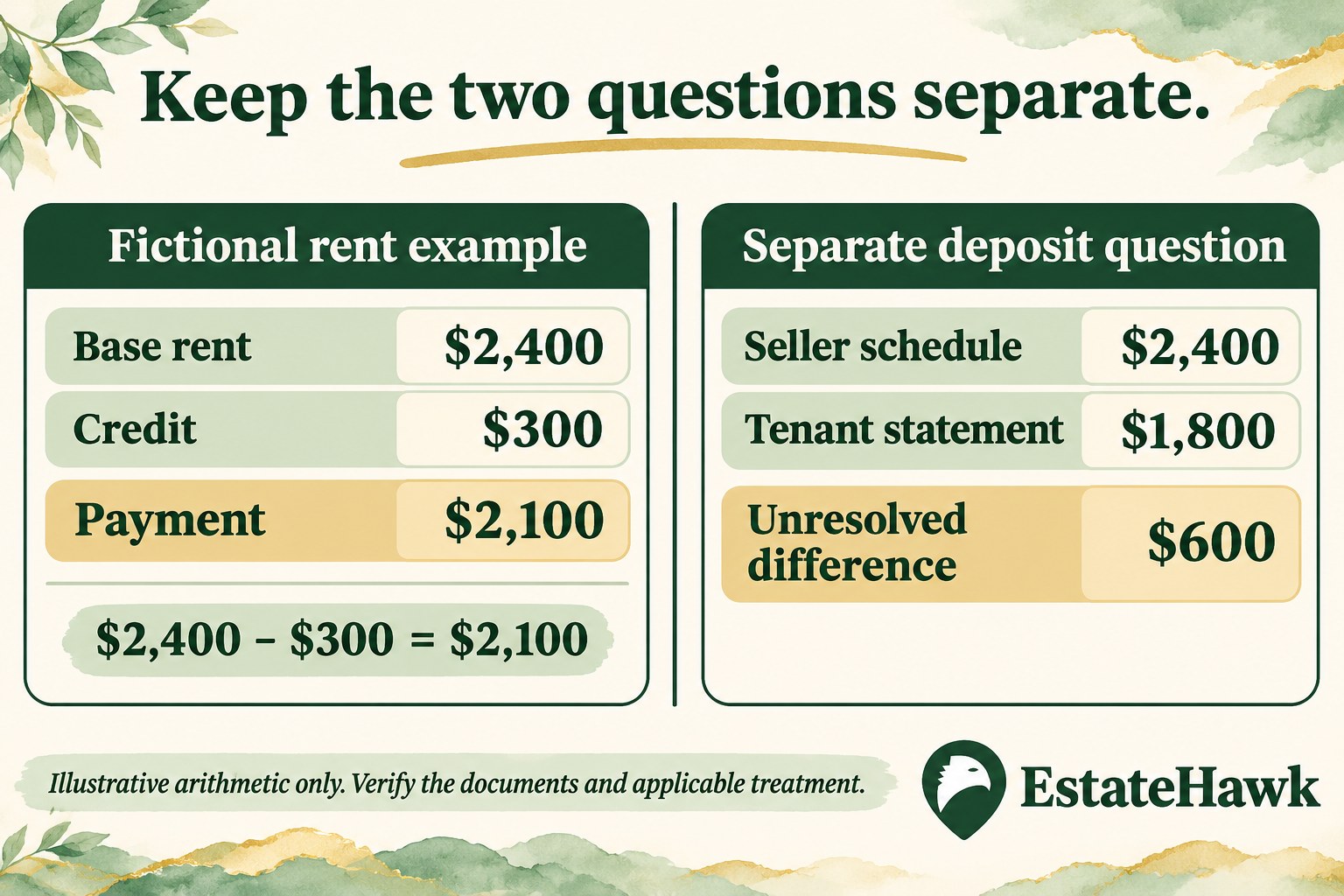
Now let us examine the four conversational questions that constantly arise whenever property buyers evaluate estoppel certificates.
The first question involves documentation: Can a buyer safely rely on the seller's certified rent roll instead of demanding tenant estoppel certificates?
Never. A rent roll is an internal accounting document prepared by the seller. It represents the seller's claims and aspirations, not the tenant's legal agreement. Sellers under financial pressure routinely omit secret rent concessions, conceal ongoing maintenance disputes, misstate security deposits, and hide unrecorded side letters on their rent rolls. Only an estoppel certificate, executed directly by the tenant, creates a legally binding representation that estops the tenant from asserting conflicting claims against the new owner.
The second question concerns modifications: What happens if a tenant returns an estoppel certificate with handwritten notes, crossed-out clauses, or qualifications?
Handwritten qualifications on an estoppel certificate are flashing warning lights that must never be ignored. If a tenant crosses out a paragraph stating that the landlord has fulfilled all maintenance duties, or writes in the margin that a commercial air conditioning unit is broken, that qualification represents an active legal dispute. You must deliver the qualified certificate to your real estate attorney immediately. The seller must be required to formally resolve the dispute, pay for the required repairs, or provide an escrow credit prior to closing. Never accept a qualified estoppel certificate without an attorney's review.
The third question involves document types: Is a tenant lease estoppel certificate the exact same document as a Homeowners Association or Condominium estoppel?
No. They serve completely different legal functions and govern entirely different relationships. A tenant lease estoppel certificate is a private document executed by a commercial or residential tenant confirming the terms of their lease agreement. An HOA or condominium estoppel certificate is a statutory document issued by an association board certifying the status of parcel assessment dues, delinquent late fees, pending special assessments, and open architectural rule violations against the real estate. Both documents may be necessary if you are purchasing a leased condominium unit, but they cannot be substituted for one another.
The fourth question addresses technology: Where do modern property software platforms and automated research tools fit into estoppel analysis?
Property software platforms and automated research databases are outstanding for preliminary due diligence, checking historical property sales, reviewing corporate entity registrations, and identifying underlying recorded deeds. However, digital tools cannot review the signed physical lease documents in a tenant's filing cabinet or detect unrecorded verbal agreements. Software research must always be paired with on-site lease auditing, direct tenant estoppel certificate collection, and professional real estate legal counsel.
When you purchase tenant-occupied real estate, approach the lease audit with absolute discipline.
Never waive an estoppel contingency. Require signed estoppel certificates from every single commercial tenant and residential occupant. Compare every returned certificate against the base lease, audit the security deposits down to the penny, and verify that no unrecorded purchase options exist.
Operating with that level of legal and operational rigor is what protects your capital, preserves your cash flow, and ensures that the rental income you buy is genuine, defensible, and legally secure.